Your partner
holds the key.
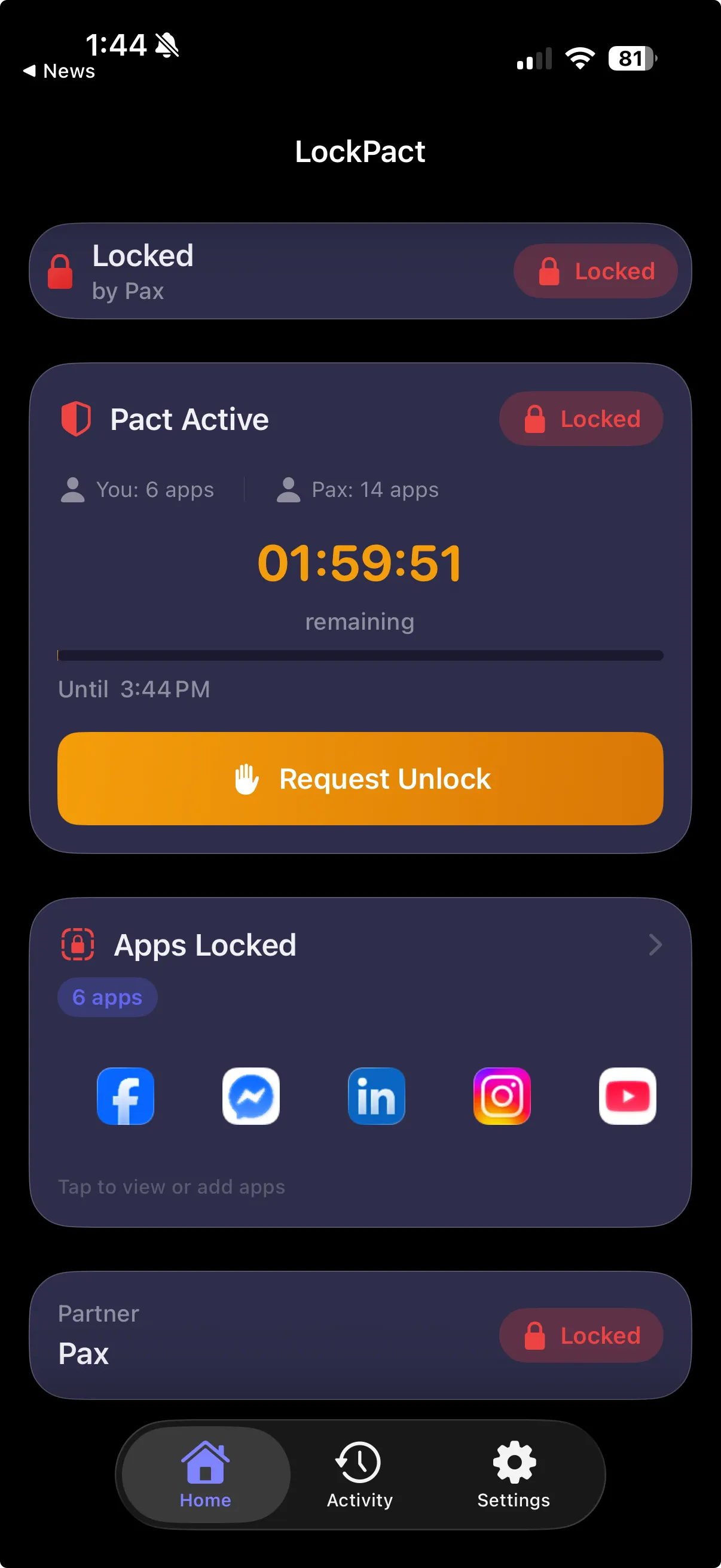
LockPact pairs you with someone for mutual screen time accountability. Block your apps. Only your partner can unlock them. Free.
iPhone · No subscription · Privacy-first
How It Works
Three steps. One partner.
Pair Up
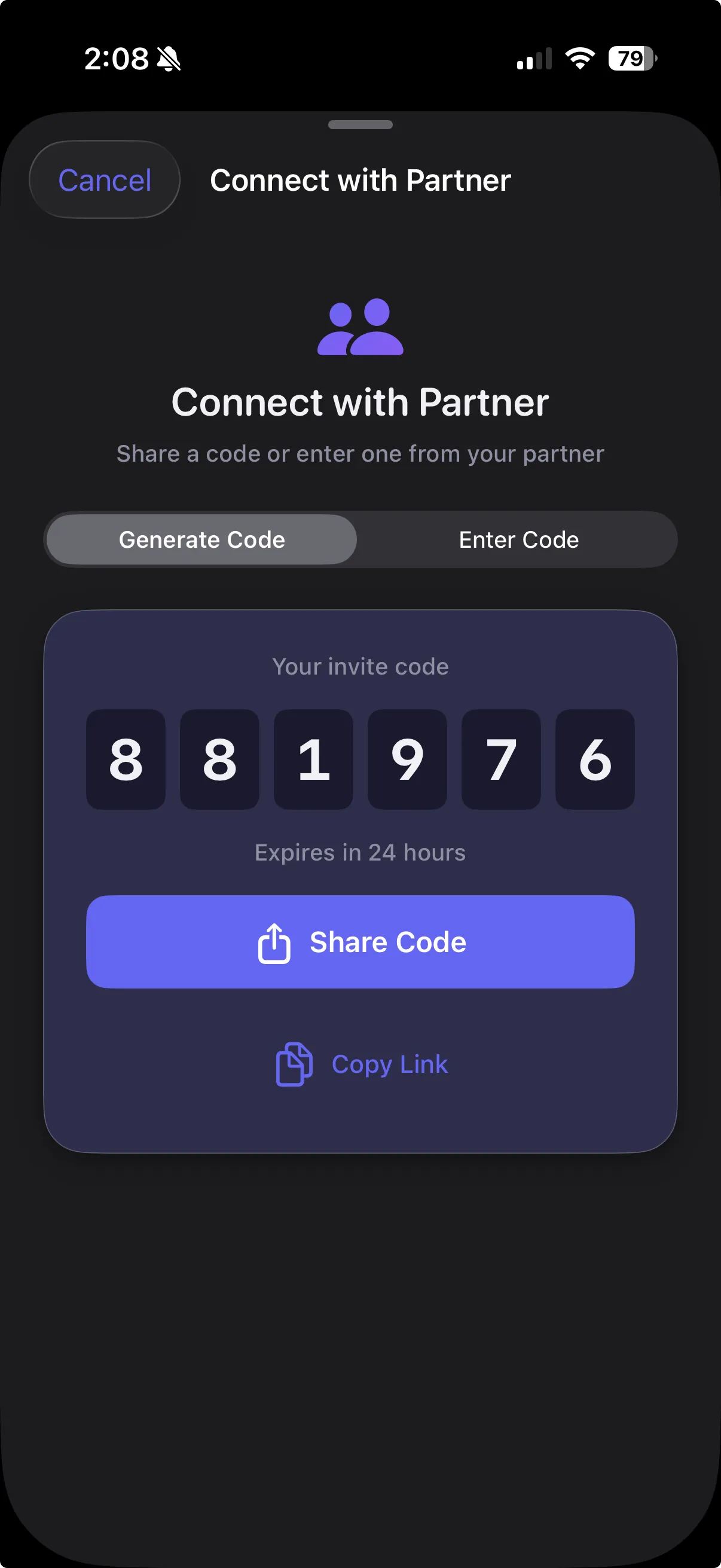
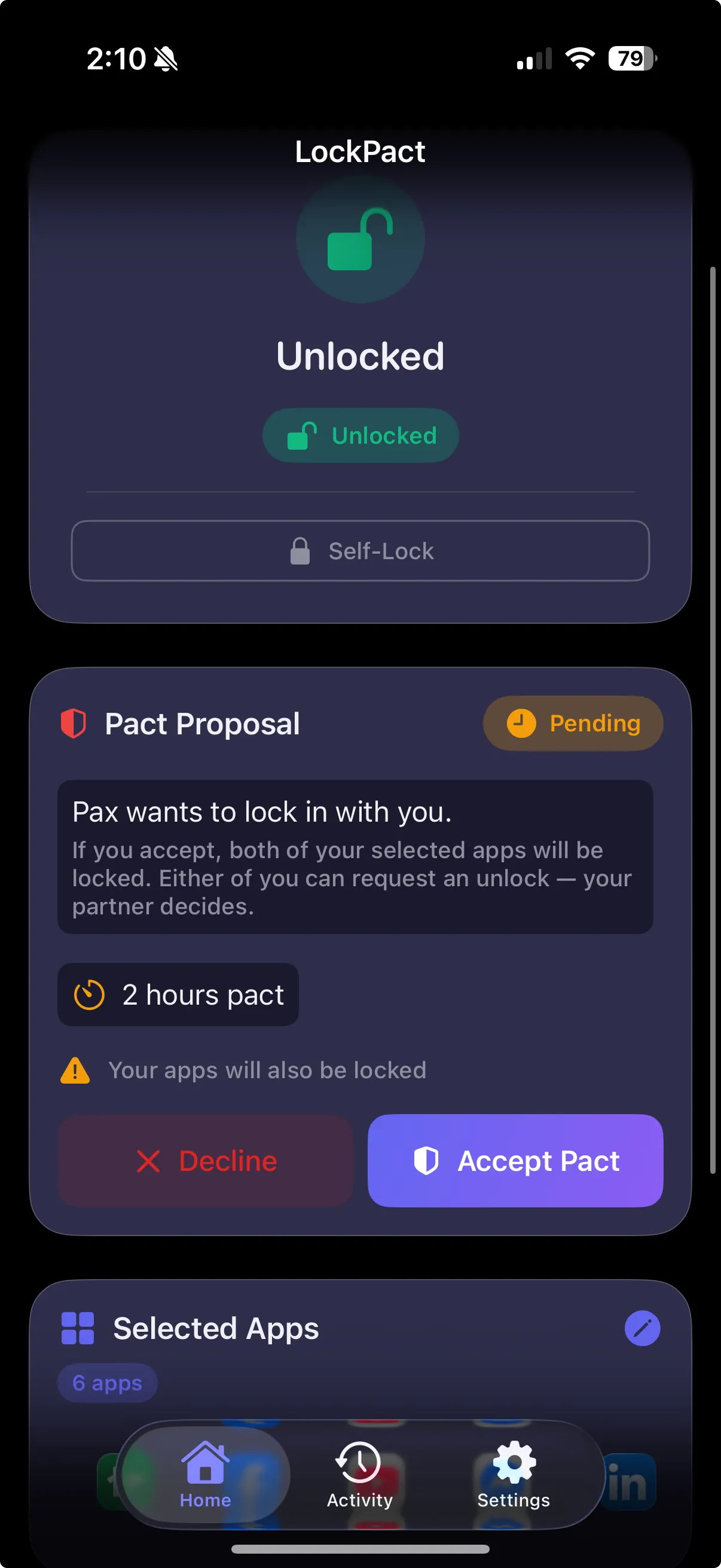
Share a 6-digit code with your partner. A friend, a roommate, someone who gets it.
Lock Your Apps
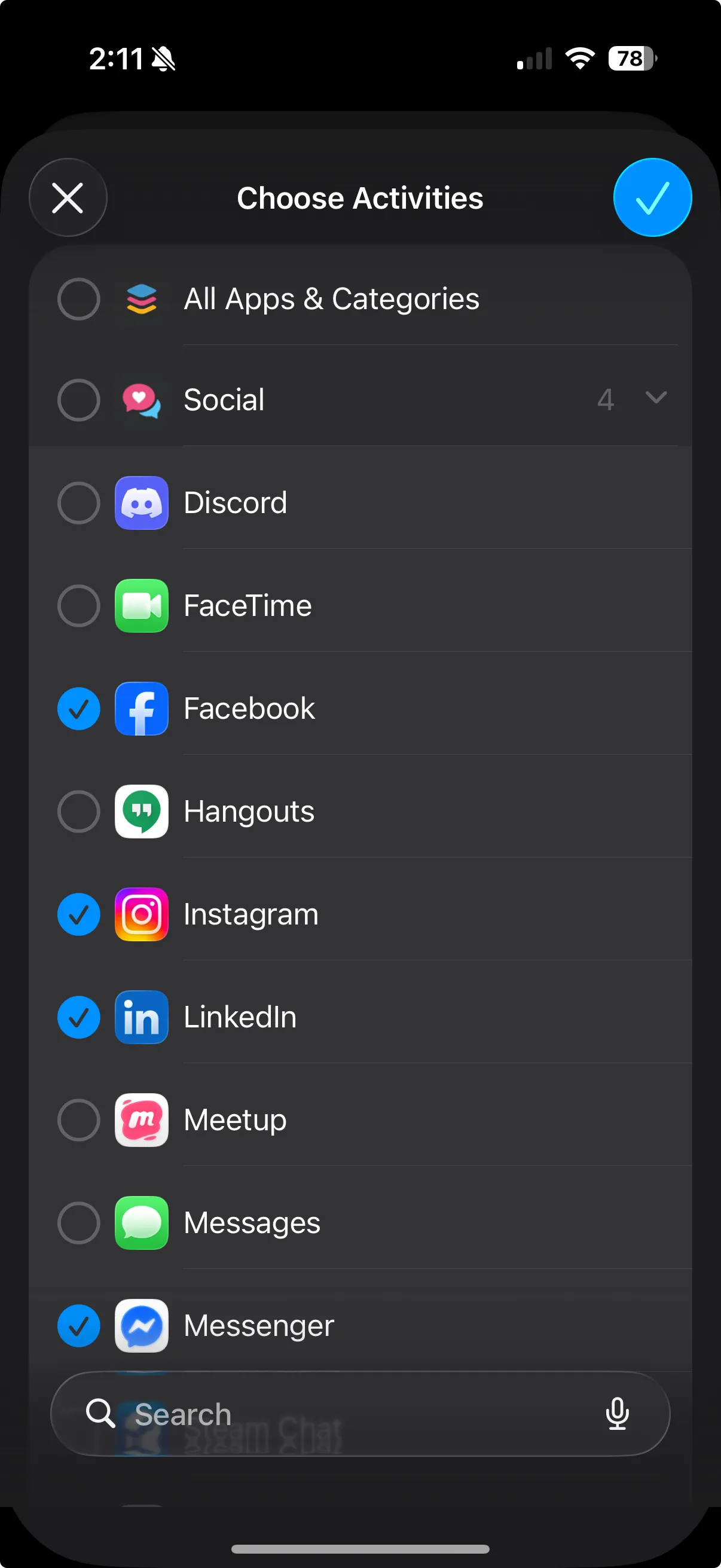
Each of you selects which apps to block. Instagram, TikTok, whatever pulls you in.
Stay Honest
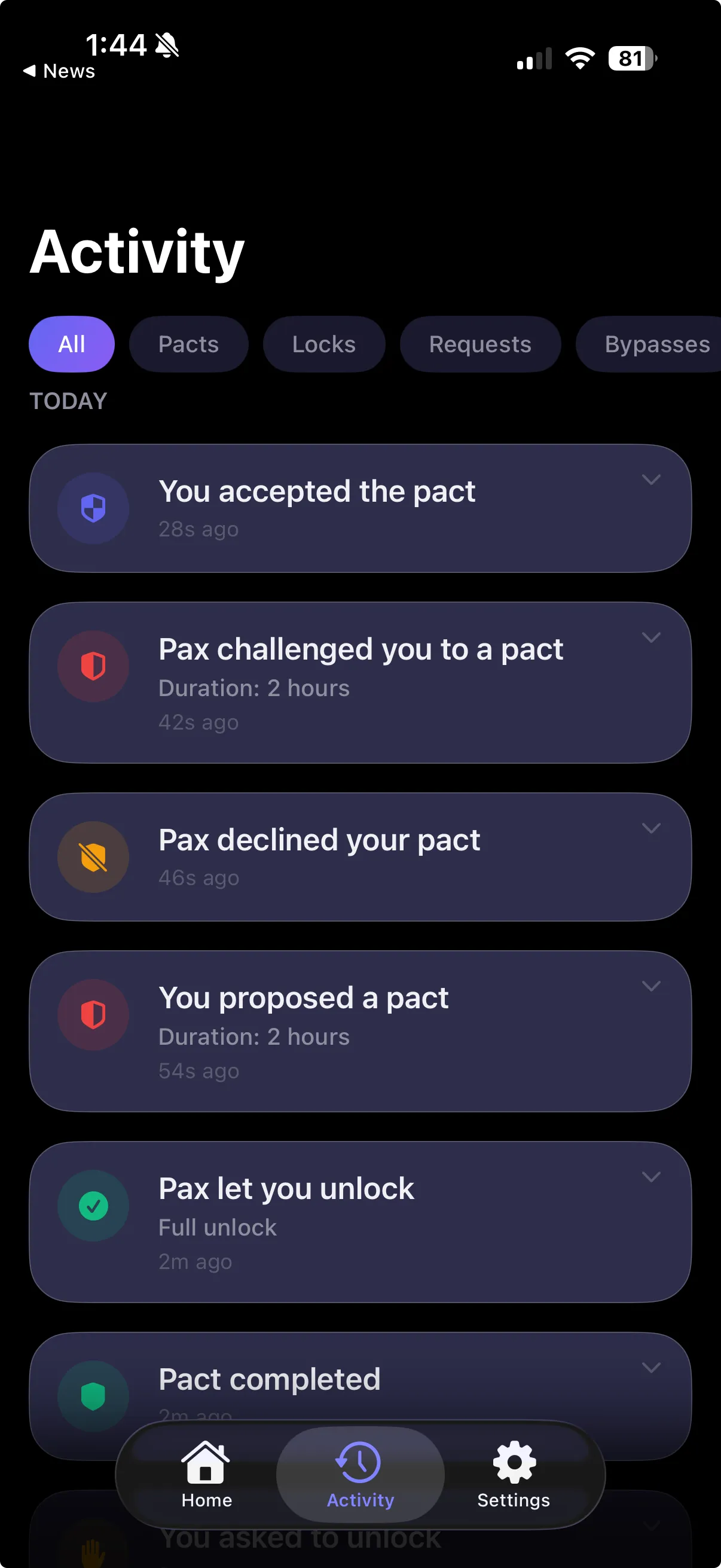
Only your partner can approve an unlock. Bypass? They'll know.
The Pact Flow
From pair to pact in under a minute.
Pair with someone you trust
Share a 6-digit code. One minute to pair.
Why LockPact Is Different
Built different on purpose.
Not Another Solo Blocker
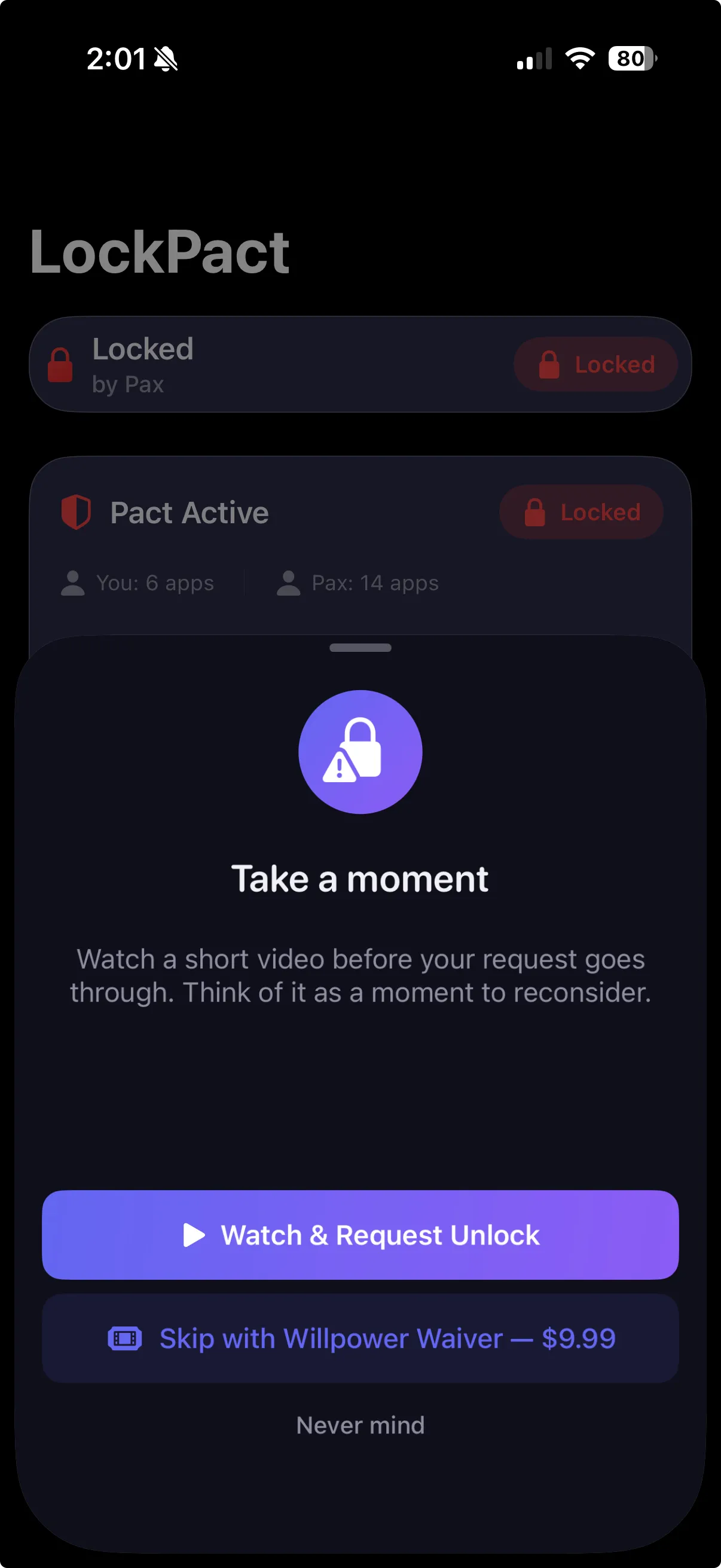
Every screen time app lets you disable your own blocks. LockPact puts the key in someone else's hands. You hold theirs. Accountability goes both ways.
Bypass Detected
Try to get around the lock? Your partner gets a notification instantly. LockPact's bypass detection means there are no secrets between partners.
Actually Free
Pairing, locking, bypass detection, and unlock requests are all free. Optional one-time purchases skip the accountability ad — but you never have to buy anything.
Locks on a schedule
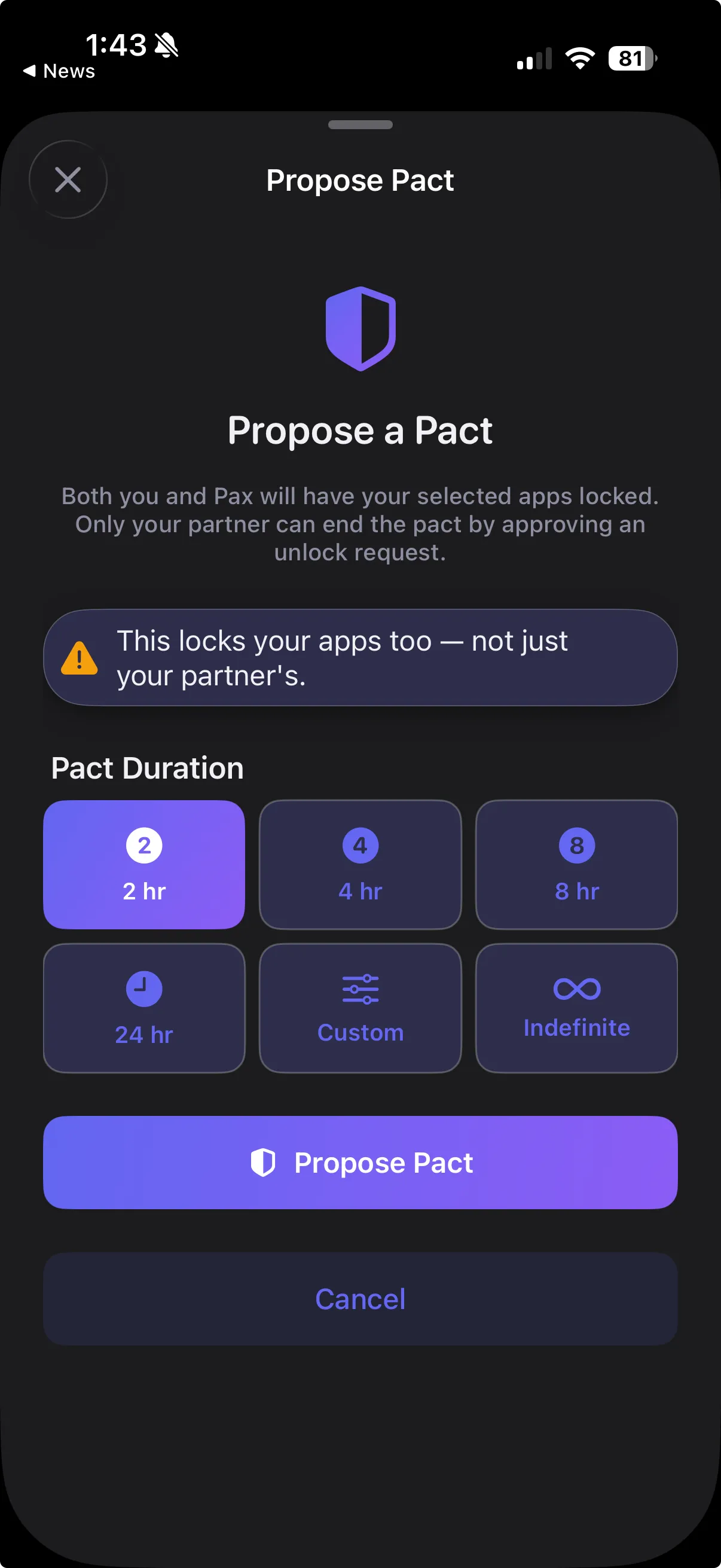
Set a lock window once (weeknights, study hours) and it locks and unlocks itself. Paired, your partner holds the key.
What LockPact Is
What it is — and what it isn't.
✓ What LockPact Is
- Mutual accountability — your partner holds the key
- Real bypass detection — no secrets
- Free core product — no subscription
- Privacy-first — screen time data never leaves your device
- Built natively for iPhone with Apple's Screen Time API
✗ What LockPact Isn't
- A solo willpower app you'll disable in 3 days
- A parental control tool
- A surveillance app — we can't see your apps
- A subscription trap
- On Android — yet
What Partners Are Saying
Real people, real accountability.
"My girlfriend and I had a no-phones-after-8pm rule that never stuck. LockPact made it real — we start a pact every night, and I've read more in three weeks than I did all last year."
— Anthony W.
"My best friend lives across the country, so LockPact became our nightly check-in. When we're both locked in, I know she's present — and she knows I am. It's changed what staying close looks like."
— Victoria M.
"I assumed I'd find a loophole in LockPact. There isn't one — not without my partner getting pinged the moment I try. First screen time app where accountability actually has teeth."
— Omar H.
Questions
Common questions
Guides
Start with the guides people use most
Screen Time on iPhone: the iOS 27 guide
Every setting, with exact steps and screenshots.
How to lock (or block) apps on iPhone
Every built-in method and who can turn each off.
How to block websites on iPhone
The iOS 27 steps, and how to make it hold.
Screen Time passcode: set, change, reset
Four digits, recovery, and handing it to someone else.
Best app blocker for iPhone
Free options compared, with prices checked.
Best screen time apps for iPhone
Ten apps, and who can turn each one off.
Apps where a friend controls your screen time
Every app that puts another person in the loop.
Best apps for long-distance couples
By job, with prices, plus phone boundaries.
From the Blog
Latest from LockPact
App Blockers You Can't Bypass on iPhone — Ranked, Honestly
No iPhone app blocker is truly unbypassable. Here's the real off-switch for Opal, one sec, ScreenZen, Brick, AppBlock, and Screen Time — ranked, free to read.
AppBlock vs. LockPact: Feature Comparison
AppBlock is free with a paid Premium tier; LockPact is free. AppBlock's Approval Access is one-way and Premium-only — LockPact's mutual lock is neither.
Apps That Let a Friend Control Your Screen Time (2026)
A real roundup of apps where a friend or partner — not just you — has to approve your screen time. What they actually do, what they cost, and how to pick.
Best Screen Time Apps for Couples (2026)
An honest comparison of the actual apps built for couples managing screen time together — what's mutual, what's one-way, what it costs, and where LockPact fits.
Clearspace App Review: What It Actually Does (2026)
An honest Clearspace review — pricing, the pushup-to-unlock mechanic, and what its 'accountability partner' feature really does compared to a mutual lock.
Cold Turkey vs. LockPact: Hard Blocking vs. Accountability
Cold Turkey is the most aggressive app blocker available. LockPact uses social accountability instead. Here's how they compare and which fits your situation.
Freedom vs. LockPact: Which Screen Time App Fits You?
Freedom blocks apps and websites across all your devices. LockPact uses partner accountability on iPhone. Different problems, different fix — how to choose.
How to Lock Instagram After a Time Limit on iPhone
The three real ways to lock Instagram — after a time limit, during set hours, or so you can't override it yourself. Free, no subscription.
ScreenZen vs. LockPact: Friction vs. Accountability
ScreenZen's escalating friction vs. LockPact's mutual partner lock — full comparison, real-world example, and when ScreenZen is the better pick.
Best Screen Time Apps for iPhone (2026, Prices Checked)
The best screen time apps for adults on iPhone, compared on what they do, who can turn each one off, and what they cost. Apple's built-in Screen Time included.
Brick vs Bloom: Price, Rules and Losing the Key (2026)
Brick vs Bloom compared: price, how each one locks and unlocks, emergency exits, and what happens when you forget or lose it. Plus the no-hardware option.
How to Block Reddit on iPhone (App and Website, iOS 27)
How to block Reddit on iPhone, in the app and in the browser, with Screen Time on iOS 27, and how to make it hold when someone else has the key.
How to Block Snapchat on iPhone (iOS 27)
How to block Snapchat on iPhone with Screen Time on iOS 27 when Snapchat has no limit of its own, and how to make it hold when someone else has the key.
How to Block TikTok on iPhone (3 Ways, iOS 27)
How to block TikTok on iPhone with Screen Time on iOS 27, how to use TikTok's own daily screen time limit, and how to make it hold when someone else has the key.
How to Block YouTube on iPhone (and Turn Off Shorts)
How to block YouTube on iPhone with Screen Time on iOS 27, how to turn off or limit YouTube Shorts in the app, and how to make it hold when someone else has the key.
Screen Time on iPhone: The Complete iOS 27 Guide
Every Screen Time setting on iPhone in iOS 27, with exact steps: check usage, Screen Time Schedule, Time Allowances, Always Allowed, passcode, and how to make it hold when you set it for yourself.
Screen Time Limit Not Working? Fixes + the Real Reason
Screen Time limit not working? Check what Apple documents first, then the real reason: you set the passcode, so you can override it. iOS 26.4 changed that, but only if someone else holds the code.
Best App Blocker for iPhone: Free Options Tested (2026)
The best app blocker for iPhone, free or nearly: 11 options compared on what's actually free, who can turn each one off, and what it costs, with prices checked October 16, 2026.
Best Instagram Blocker for iPhone (Free Options, 2026)
The best Instagram blocker for iPhone, compared: Instagram's own reminder, Screen Time, one sec, ScreenZen, Opal and LockPact. What each stops, who can turn it off, and cost.
Is Brick Worth It? 5 Brick Alternatives Without Hardware
Is Brick worth it? What the Brick app and device cost, who it suits, and five Brick alternatives with no hardware, with the real off-switch for each. One is free.
How to Block Websites on iPhone (Safari), iOS 27 Guide
How to block a website on iPhone and Safari on iOS 27: exact steps with screenshots, why you can undo it yourself, and how to lock websites so someone else has to approve. Free.
How to Lock (or Block) Apps on iPhone: Every Built-In Way
Every built-in way to lock or block apps on iPhone in iOS 27: Face ID lock, hide, Time Allowances, Screen Time Schedule, Content & Privacy, Guided Access. Exact steps and who can turn each off.
Doomscrolling: What It Is and How to Stop (2026)
What doomscrolling means, why it's hard to stop, and how to stop it on iPhone: remove the trigger, set limits that hold, switch to grayscale, and hand the off-switch to someone else. Free options included.
Free Opal Alternative? Opal vs. LockPact (2026)
Looking for a free Opal alternative? A fair comparison of Opal and LockPact — the real cost of Opal's $100/year plan, what each app actually enforces, and when Opal is the better pick.
Screen Time Passcode: Set, Change, Reset (iOS 27 Guide)
How to set, change, reset or turn off your iPhone Screen Time passcode on iOS 27, what happens if you forget it, how recovery works, and why someone else should hold it.
Best Apps for Long-Distance Couples (Free + Paid, 2026)
The best apps for long-distance couples, sorted by what you need: staying in touch, daily questions, shared calendars, watching together, and phone boundaries. Prices checked.
How to Set Phone Limits That Actually Stick
Most self-imposed phone limits fail within two weeks. Here's why — and how to design limits that actually hold when your willpower is low.
Lock Screen Time Settings: Give Your Partner the Passcode
Let your partner set your Screen Time passcode so you can't quietly switch off your blocker or delete it. Free setup guide, no subscription.
Phone Boundaries at Work: What's Actually Reasonable
Personal phone use at work is universal and largely unaddressed. Here's what's reasonable, what's excessive, and how to set limits that actually hold.
Phubbing: What It Is and How to Actually Stop Doing It
Phubbing — phone snubbing — is the thing you and your partner both do without noticing. Here's what it actually is, why it happens, and what stops it.
Why Screen Time Apps Don't Work (And What Does)
Most screen time apps fail because they treat a social problem as a technical one. Why solo blockers fail, and what actually works instead: accountability.
AppBlock vs. BlockSite: An Honest Comparison
AppBlock and BlockSite both block apps and sites for free, with a paid tier behind the strict/anti-bypass features. Neither has a real accountability partner.
Screen Time for Adults on iPhone: Why Apple's Tool Fails
Screen Time was built for a parent and a child. Used on yourself, you're both, and that design gap is why it doesn't hold. Here's what fixes it, free.
Accountability Partner Apps for Phone Addiction, Ranked
Free accountability partner apps for phone addiction, ranked by how much power your partner has, from a notification to a mutual lock. LockPact included.
Screen Time Accountability Partners With a Best Friend
Looking for an accountability partner app with friends instead of a partner or roommate? Here's how to set up a mutual phone pact with your best friend.
How College Students Fix Their Phone Habits (Study Mode)
How to stop scrolling in class and actually study: what college students say works, what doesn't, and why willpower-only strategies fail by the second hour.
Can iPhone Focus Mode Block Apps? What It Does (2026)
No — Focus mode filters notifications and can hide Home Screen pages, but it doesn't lock apps. Here's what actually does, and where Focus mode still helps.
Friend Controls vs. LockPact: Which Approval App Fits?
Friend Controls and LockPact both put a real person in charge of your screen time overrides — one is one-way, the other is mutual. The honest comparison.
FriendLock vs. LockPact: Selfie Rewards vs. Approval
FriendLock and LockPact both put a friend in the picture, but only one actually gates your screen time on their approval. Here's what each app really does.
What Happened to the Moment App? 5 Alternatives (2026)
What happened to the Moment app: when and why the original shut down in 2021, why it's delisted, and what to know about the unrelated app with the same name.
one sec vs. LockPact: Friction vs. Accountability
one sec uses friction (a deep breath delay) before opening apps. LockPact uses partner accountability. Compare both approaches and pick the right one.
Opal vs. one sec: The Actual Referee Comparison (2026)
Opal and one sec are the two biggest names in solo screen time apps. Here's how their pricing, mechanics, and enforcement actually compare — verified this week.
Screen Time Accountability Partners: Why They Work
What makes a screen time accountability partner actually work, per behavioral research — and why solo willpower apps keep failing where partners succeed.
Why Streaks Work — And Why They Sometimes Don't
Streaks are a powerful behavior change tool — until they aren't. Here's the psychology behind why they work, when they fail, and how to use them well.
Phone Stacking Game: The Rules and Whether It Works
Phone stacking is a dinner game: everyone piles their phones face-down, first to grab theirs pays the bill. Here's whether it actually works.
Screen Time Contract Template for Couples (Free, Copy-Paste)
A free screen time contract template for adult couples — not the kids' version. Copy the full text below, fill in your own rules, and sign it together.
Partner Always on Their Phone? How to Have the Talk
"My partner is always on their phone" usually starts a fight when said out loud. Here's how to have the conversation that actually leads somewhere.
The 7-Day Phone Pact: A Digital Detox Challenge for Two
A 7-day digital detox challenge with a friend or partner beats solo willpower. Here's how to set the rules, survive day 3, and what to do when you bypass.
Long Distance Relationship Phone Habits: A Different Problem
Long distance relationship phone habits aren't the same problem as co-located couples face. Here's how to navigate connection versus avoidance across distance.
Social Media Detox: Does It Actually Work?
Social media detoxes work short-term. Research shows most people return to baseline within weeks. Here's why — and what produces lasting change instead.
Phone Use and Anxiety: The Loop Most People Don't Recognize
Phone use and anxiety feed each other in a cycle that's hard to see from inside it. Here's how the loop works, and how to interrupt it.
How to Reduce Your TikTok Use (What Actually Works)
TikTok's algorithm is built to prevent you from stopping. Here's what actually works to reduce your use — and why willpower isn't one of the options.
What to Do When Your Partner Bypasses the Lock
Bypass happens. What you do next determines whether your phone pact survives or falls apart. Here's the conversation to have — and the traps to avoid.
Digital Minimalism Review: What It Gets Right and Misses
Cal Newport's Digital Minimalism nails the 'why' but leaves a gap in the 'how.' What the framework gets right, where it falls short, and what's missing.
What Screen Time Before Bed Actually Does to Your Sleep
The research on blue light, phone use before sleep, and why most advice misses the real culprit. What actually helps — and what doesn't.
Couples and Phone Boundaries: A Field Guide
How phones quietly erode presence in relationships, and a practical playbook for couples who want to be more there for each other without going fully off-grid.
Roommate Phone Pacts: How to Stop Late-Night Scrolling
Why roommate phone pacts often work better than solo blockers — a practical guide to setting one up, picking apps, and handling bypass without making it weird.
Get Started
Ready to lock in?
Download LockPact. It's free. Your partner is waiting.